
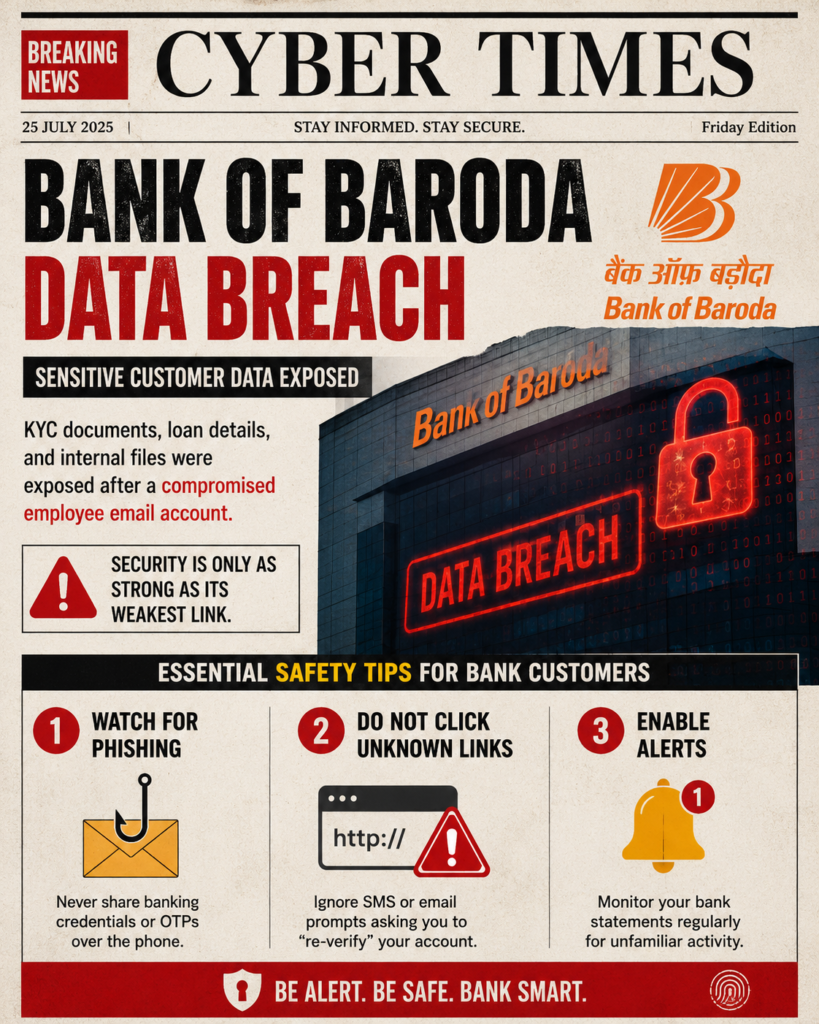
Reports emerged after a threat actor uploaded a massive database—ranging between 700 GB and 1 TB—onto a dark web forum. The leaked repository allegedly contained sensitive information from over 1,000 branches nationwide, including:
- KYC & Identification Documents: Aadhaar numbers, PAN cards, and customer photos.
- Financial Records: Account details, loan application documents, and customer transaction files.
- Internal Files: Branch audit logs, vigilance documents, and corporate communications.
In an official statement on X (formerly Twitter), Bank of Baroda clarified that the incident was caused by a compromised employee email account, which allowed unauthorized access to certain files.
2. Is Your Core Account Money Safe?
The short answer is: YES, your funds are safe.
Bank of Baroda explicitly confirmed that its core banking systems were not compromised and remain secure.
Hackers cannot directly withdraw funds from your bank account simply by holding your name, loan details, or Aadhaar number. Modern banking requires multi-factor authentication (MFA) to complete any transaction, such as:
- Debit/Credit Card PINs
- Net Banking passwords
- One-Time Passwords (OTPs) sent to your mobile
- UPI PINs
3. The Real Threat: Phishing & Social Engineering
While your money remains in your account, the biggest threat following a data breach is phishing.
Because cybercriminals may possess personal details like your full name, loan amount, or branch location, they can sound remarkably convincing when contacting you. Fraudsters may pose as bank officials claiming your account has been “compromised” and urge you to share an OTP or click a verification link to “secure” your account.
4. How BoB Customers Can Stay Safe
To protect yourself against potential fraud or identity theft following this leak, follow these security best practices:
🔑 1. Update Your Credentials
Change your bob World app password, NetBanking login details, and transaction passwords immediately. Ensure you use strong, unique passwords.
🚫 2. Never Share OTPs or PINs
No bank representative will ever ask for your OTP, UPI PIN, or NetBanking password over a phone call, email, or SMS. If anyone asks for these details, hang up immediately.
🕵️ 3. Beware of Unexpected Calls or Messages
Be extremely cautious of incoming calls claiming to be from Bank of Baroda’s customer support or fraud department. If in doubt, end the call and dial the official Bank of Baroda customer service helpline directly.
📱 4. Monitor Account Activity
Enable SMS and email alerts for all banking transactions. Check your account statements regularly for any unauthorized activity.
🔒 5. Lock Your Aadhaar Data
Since Aadhaar details were reportedly part of the leak, lock your Aadhaar biometrics via the official mAadhaar app or the UIDAI portal to prevent unauthorized KYC verification attempts.
Final Thoughts
The Bank of Baroda data leak highlights the growing importance of cybersecurity in modern banking. While the bank’s core security systems remain intact, customer vigilance is key. Stay alert against suspicious phone calls or emails, and never grant remote access or share verification codes with anyone.